Huggin Molly
Overview
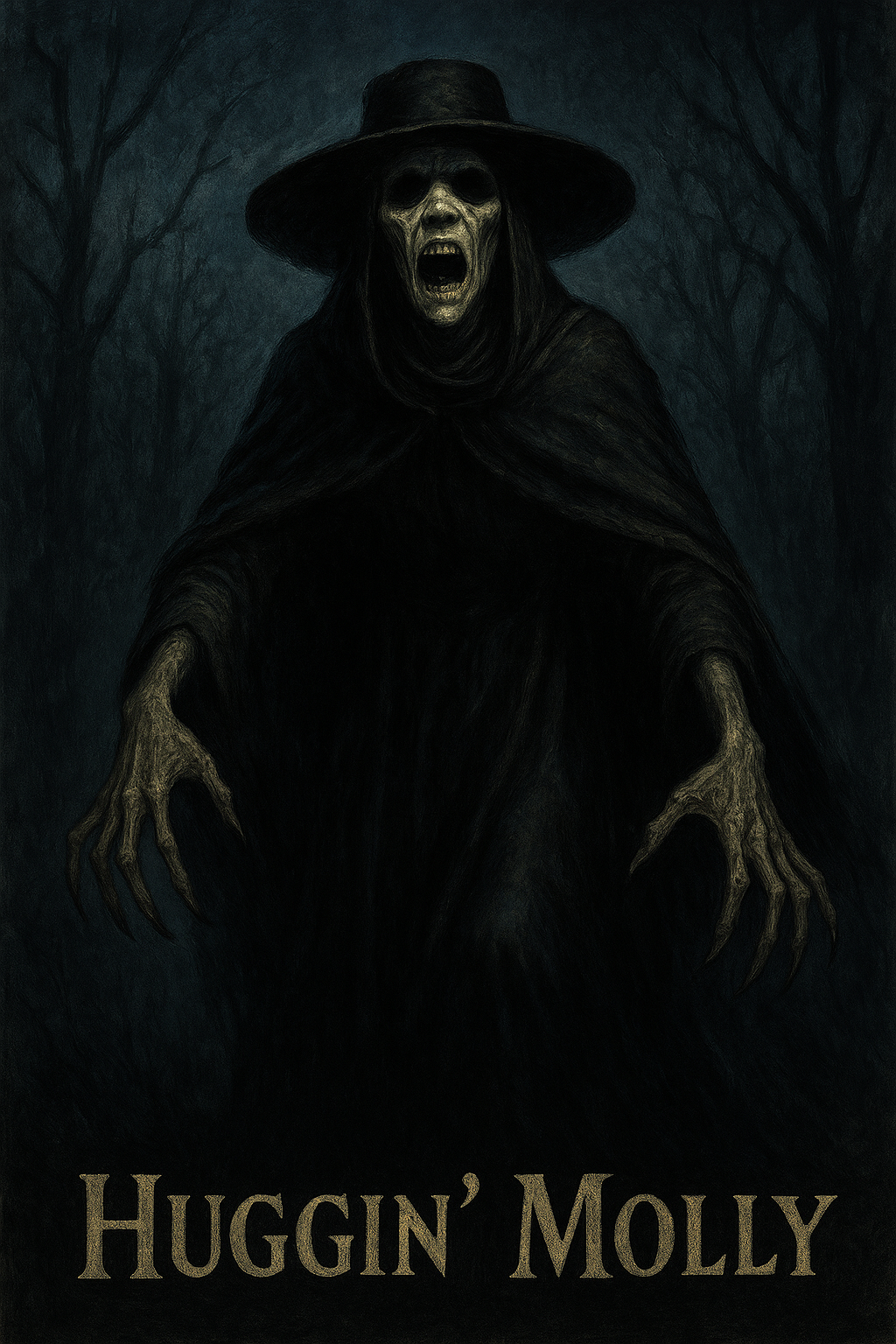
Description
The Legend of Huggin’ Molly: Alabama’s Chilling Embrace
Deep in the heart of Alabama folklore lurks a figure as mysterious as she is terrifying: Huggin’ Molly. For generations, this spectral woman has haunted the small town of Abbeville, leaving behind a legacy of spine-tingling tales whispered around campfires and passed down through families. But who—or what—is Huggin’ Molly, and why does her story endure?
Origins of the Legend
The tale of Huggin’ Molly dates back to the early 1900s in Abbeville, Alabama. Locals describe her as an unnaturally tall woman, clad in black, with a wide-brimmed hat that hides her face. She appears only at night, gliding silently through the streets and country roads. Her eerie presence is accompanied by one chilling habit: she seeks out lone wanderers, especially children, and wraps them in a bone-crushing hug before screaming in their ears.
While no one knows her true identity, theories abound. Some say she was a grieving mother who lost her child and now roams the earth searching for comfort. Others believe she’s a cautionary spirit, invented to keep kids from staying out too late. Whatever the truth, her legend has become a permanent fixture in Southern ghost lore.
The Encounter
Imagine walking home under a moonlit sky, the night air thick with silence. Suddenly, you feel a presence behind you—a towering shadow that moves without sound. Before you can react, long arms envelop you in a suffocating embrace. Then comes the scream: a piercing, otherworldly wail that chills your soul. And just as quickly as she appeared, she vanishes into the darkness.
Those who claim to have met Huggin’ Molly describe the experience as unforgettable. Though she never harms her victims physically, the psychological impact is profound. Her hug is not one of comfort—it’s a reminder of mortality, fear, and the unknown.
Symbolism and Cultural Impact
Huggin’ Molly is more than a ghost story; she’s a cultural artifact. In rural communities, legends like hers serve as warnings and moral lessons. Parents used her tale to keep children safe indoors after dark, reinforcing boundaries in an era before modern conveniences.
Today, her story lives on through local businesses, Halloween events, and even a restaurant named after her in Abbeville. She has become a symbol of Southern folklore—an eerie blend of mystery and tradition that fascinates storytellers and paranormal enthusiasts alike.
Why We Still Fear Her
What makes Huggin’ Molly so compelling? Perhaps it’s the simplicity of her terror. She doesn’t chase, doesn’t harm—she only hugs and screams. Yet that act, stripped of malice yet steeped in dread, taps into primal fears: the fear of being alone, the fear of the unknown, and the fear of losing control.
Her legend reminds us that sometimes, the most haunting figures are not those who seek to destroy us, but those who seek to hold us close.
Final Thoughts
Whether you believe in ghosts or dismiss them as superstition, the story of Huggin’ Molly endures because it speaks to something universal: the power of a good scare. So next time you find yourself walking alone on a quiet Alabama night, listen closely. If you hear footsteps—or feel arms wrapping around you—remember the legend. And hope she doesn’t scream.
Behavior
Appears at night, chases people, gives crushing hugs
Reported Sightings (0)
No reported sightings yet.
Geographic Distribution
Alabama, USA
Abbeville streets
Characteristics
7 feet
Historical Context
Early 1900s
Abbeville local legend