Gowrow
Overview
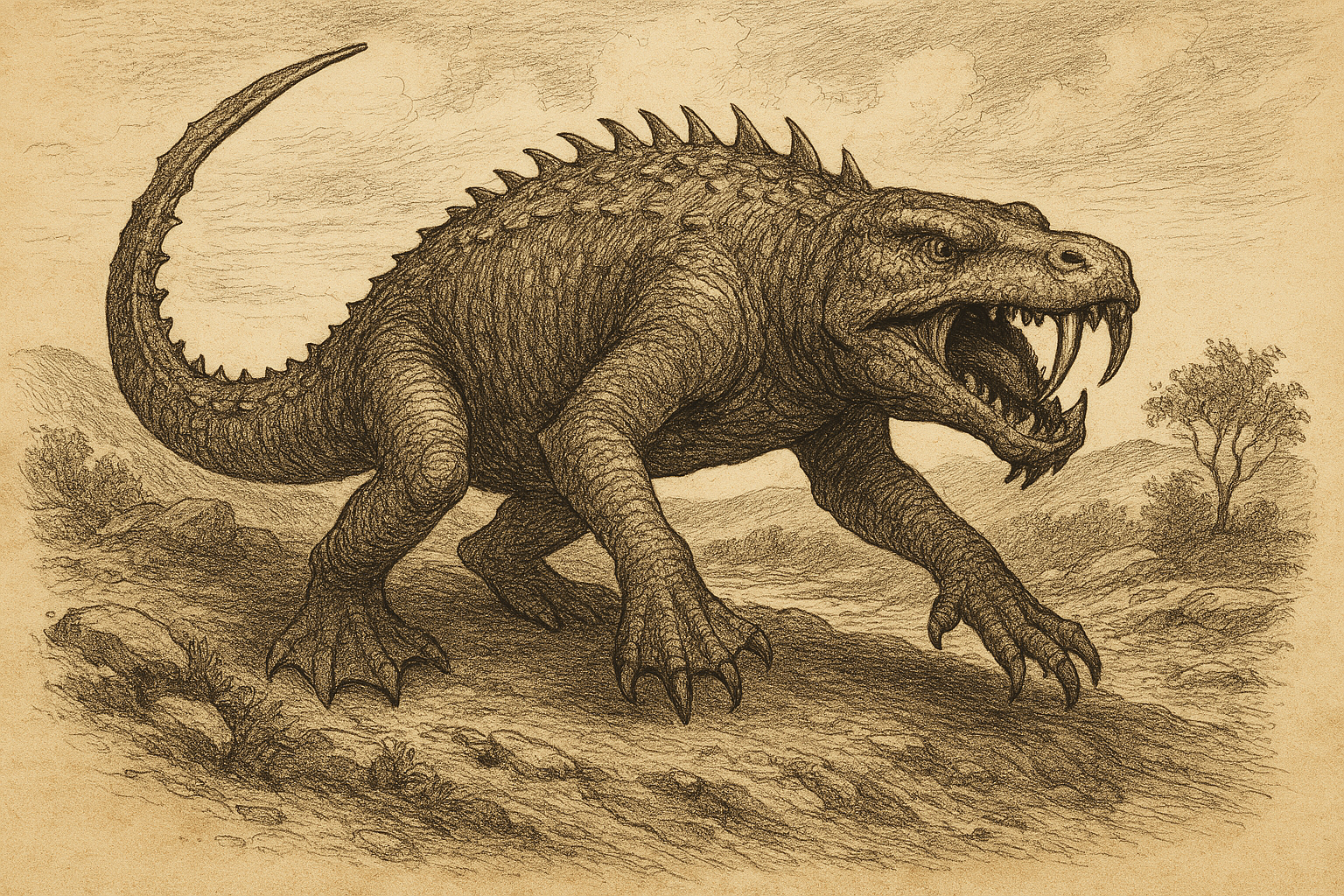
Description
The Legend of the Gowrow: Arkansas’ Most Bizarre Cryptid
Introduction
Deep in the rugged hills and limestone caves of the Ozarks, Arkansas folklore whispers of a monstrous creature that once terrorized livestock and haunted the imaginations of frontier settlers—the Gowrow. Unlike Bigfoot or the Loch Ness Monster, the Gowrow is a uniquely Southern cryptid, born from a mix of tall tales, sensational journalism, and the eerie isolation of the Ozark wilderness. Its story begins in the late 19th century, but its roots may stretch back even further into the oral traditions of the region.
Origins of the Legend
The Gowrow first leapt into public consciousness in 1897 when a shocking account described a Little Rock businessman encountering a “horrible monster” while traveling through Calf Creek Township near Blanco in Searcy County. Locals claimed the beast had been slaughtering cattle, hogs, dogs, and even horses. Its name, “Gowrow,” supposedly came from the guttural cry it emitted while attacking its prey—a sound described as a devilish roar echoing through the hills.
The Beast Described
Eyewitnesses painted a terrifying picture of the Gowrow:
- Length: Approximately 20 feet long
- Tusks: Two massive tusks protruding from its head
- Feet: Large, webbed feet ending in sharp claws
- Back: A row of short horns running along its spine
- Tail: Long and thin, tipped with a blade-like appendage
- Behavior: Emerged from lakes and caves, uprooted trees, and left behind skeletal remains of animals—and allegedly humans.
The posse that tracked the creature claimed to have found a cave littered with bones. After a fierce battle, they killed the beast with rifle fire, though not before it tore off a man’s leg and caused the earth to tremble as it charged. The carcass was reportedly shipped to the Smithsonian Institution, but it never arrived—a detail that fueled skepticism and conspiracy theories for decades.
Folklore Expands
While skeptics dismissed the story as a hoax, folklorists uncovered earlier references to the Gowrow dating back to the 1880s. Some claimed the creature was not a lone monster but a species. According to these tales:
- Gowrows hatched from soft-shelled eggs the size of beer kegs.
- Mothers carried their young in a pouch, marsupial-style.
- One story told of a man capturing a Gowrow by feeding it so many dried apples that it swelled and couldn’t escape its burrow. He charged admission to see the beast, but when the time came, he would emerge in tattered clothes claiming the Gowrow had escaped—sending crowds into a panic.
Other stories placed Gowrows in Devil’s Hole, a deep cave in Boone County, where spelunkers reported eerie noises and even had ropes bitten through by unseen jaws.
Possible Explanations
Was the Gowrow real? Theories include:
- Hoax: Many believe the original story was a fabrication for publicity.
- Misidentification: Some speculate the creature was an exaggerated account of a razorback hog or even an alligator, given its tusks and aquatic habits.
- Cultural Fabrication: Frontier communities often spun tales of fearsome critters to entertain and warn travelers, and the Gowrow fits neatly into this tradition.
The Gowrow in Popular Culture
Though largely forgotten outside Arkansas, the Gowrow remains a staple in local lore and cryptid circles. It appears in:
- Cryptid encyclopedias and podcasts
- Ozark folklore collections
- Tourism stories highlighting Arkansas’ mysterious caves
Its bizarre anatomy and dramatic origin make it one of the most colorful “fearsome critters” in American folklore.
Why the Legend Endures
The Gowrow’s tale persists because it embodies the essence of frontier myth-making: isolation, danger, and the unknown lurking just beyond the campfire’s glow. Whether a hoax, a misidentified animal, or pure invention, the Gowrow reminds us that stories—true or not—shape the identity of a place. In Arkansas, where caves plunge into darkness and rivers carve through wild hills, it’s easy to imagine something monstrous stirring in the shadows.
Behavior
Cave-dwelling, allegedly killed by hunter William Miller
Reported Sightings (0)
No reported sightings yet.
Geographic Distribution
Arkansas, USA
Ozark Mountain caves
Characteristics
20 feet long
Historical Context
1897 newspaper accounts
Ozark Mountain tall tale tradition