Blood Mountain Booger
Overview
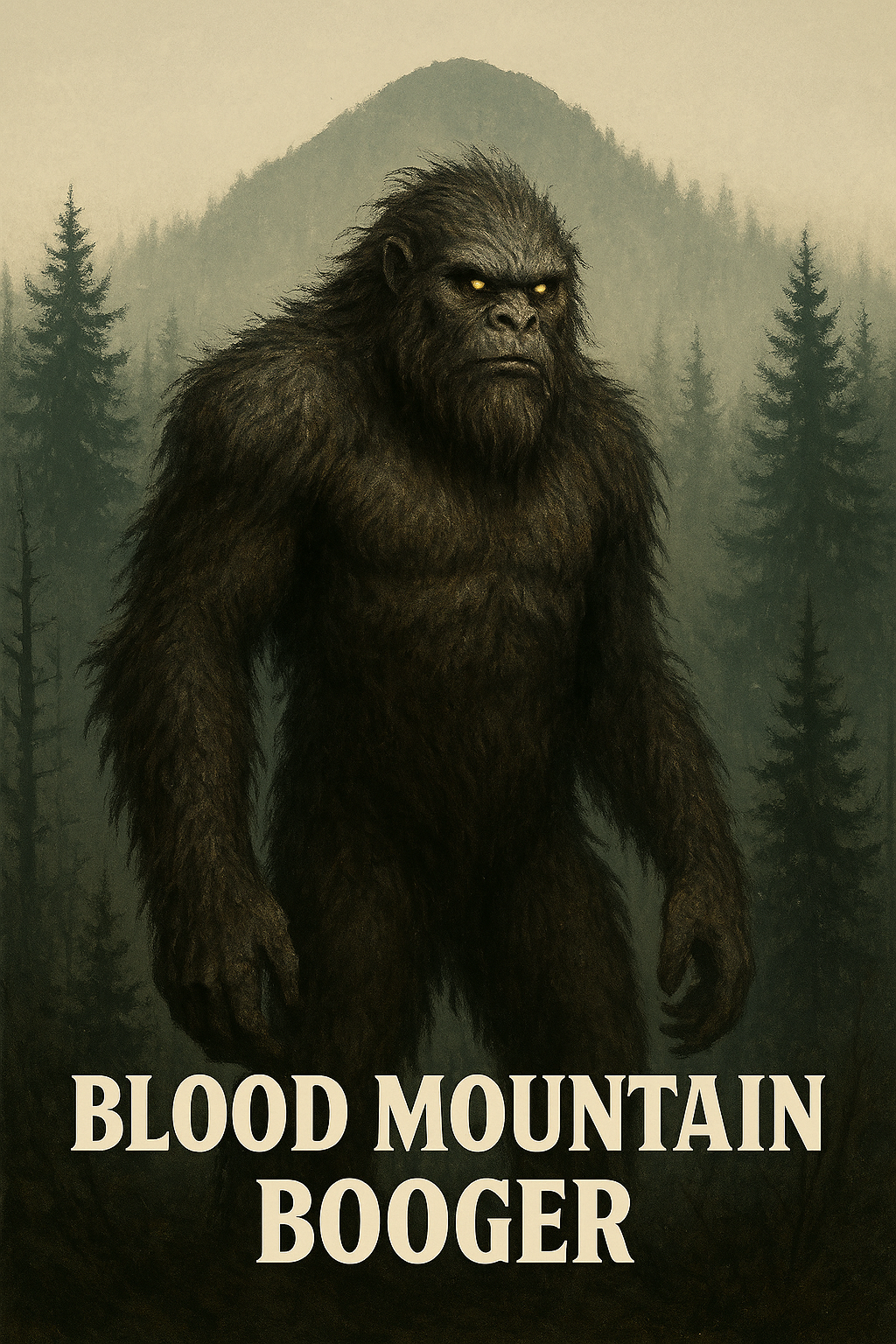
Description
Blood Mountain Booger: North Georgia’s Hair-Raising Legend Lurking in the Appalachian Mist
Meta Title: Blood Mountain Booger – The Appalachian Cryptid Haunting North Georgia
Meta Description: Explore the legend of the Blood Mountain Booger—an Appalachian cryptid tied to North Georgia folklore. Sightings, origins, theories, and tips for hikers on Blood Mountain.
Primary Keywords: Blood Mountain Booger, Appalachian cryptid, Georgia folklore, Blood Mountain hiking, North Georgia legends
Secondary Keywords: Chattahoochee National Forest, Appalachian Trail, cryptid sightings, Cherokee legends, Duncan Ridge
🏔️ Introduction: Where Beauty Meets the Unseen
High above the rolling hills of North Georgia, Blood Mountain rises with rugged grace, its granite spine slicing the sky. The sweeping views, crisp air, and winding trails draw hikers from across the Southeast. But in the hush of dawn and the creep of fog, the forest whispers a tale that’s older than trail maps and tourist guides — the legend of the Blood Mountain Booger.
A phantom. A beast. A harbinger. Whatever name you give it, the Booger remains one of the region’s most enduring mysteries — a figure woven through the hills and hollows, seen at the periphery, heard in the echoes, felt in the prickle of fear that comes when the woods go utterly still.
🪵 What is a “Booger” in Appalachian Lore?
In Appalachian tradition, a “booger” isn’t just a silly nickname — it’s a catch-all word for a spooky entity: ghost, monster, spirit, or wilderness power. Passed down through oral storytelling, “booger tales” often served as warnings to keep children close, hunters cautious, and travelers respectful of the unknown.
The Blood Mountain Booger sits squarely in this tradition: elusive, primal, and often described with details that echo broader Bigfoot-like narratives, but with a distinctly North Georgia flavor — deep rhododendron tunnels, steep ridgelines, and mist that seems to swallow sound whole.
👣 Eyewitness Descriptions: A Shadow Among the Laurels
Reports differ in detail, but certain traits repeat often:
- Stature: 7–8 feet tall, towering and broad-shouldered
- Appearance: Covered in coarse, dark hair; eyes that “glow” or catch light unnaturally at night
- Scent: Fetid, musky odor described as “wet animal mixed with rot”
- Sounds: Heavy, deliberate footsteps; low grumbles; sudden, piercing screams that ricochet through the valleys
- Behavior: Silent stalking and ambush-like presence; camps disturbed; food caches raided; claw-like marks on saplings
Sightings cluster around the Appalachian Trail near Blood Mountain’s summit, Duncan Ridge, and dense thickets where visibility drops to just a few feet.
📜 Origins: Battles, Spirits, and the Mountain’s Name
Blood Mountain’s name is a story in itself. Some local histories tie the name to an ancient battle between Cherokee and Creek peoples, while others point to the iron-red soil and the striking hues of autumn. Either way, the landscape carries a sense of solemnity — a place where memory and wildness intersect. In this context, the Booger becomes more than just a creature; it’s a presence shaped by history, geography, and reverence for the land.
🧭 Historic and Modern Encounters
- 1930s Logging Camps: Workers reported being watched from the tree line — a tall figure, never fully visible, slipping behind trunks just as someone turned to look.
- Hiker Reports (AT Section): Strange howls after dark; heavy footsteps circling camps; inexplicable fear — “like being sized up.”
- Forest Signs: Torn campsites, food bags shredded, fresh saplings bent or scored with deep markings — whether bear, human, or something else, nobody is sure.
Despite decades of stories, definitive evidence — clear photos, biological samples, bodies — remains absent. The best the legend offers are impressions: footprints, fleeting silences, and the feeling of being observed.
🔍 Three Leading Theories About the Blood Mountain Booger
1) Cryptid Hypothesis: A Hidden Species
Under this view, the Booger is a flesh-and-blood creature — perhaps a relic hominid or an unknown primate adapted to low human density and dense cover. Proponents cite similarities to Bigfoot-like sightings across the Appalachians: nocturnal patterns, avoidance of confrontation, and semi-regular “soft evidence” like tracks and tree markings.
2) Spiritual Entity: A Guardian or Restless Shade
Drawing from Indigenous narratives and widespread Southern ghost lore, some say the Booger is a spirit — an echo of violence, tragedy, or guardianship tied to the land itself. Whether protective or punitive, it manifests when boundaries are crossed or respect wanes.
3) Psychological Projection: The Wilderness Working on Us
The Appalachians are intense: deep green corridors, sudden weather, and isolation that de-tunes normal senses. Long miles can heighten pattern-seeking and fear responses, turning mundane sounds into looming presences. In this theory, the Booger is the mind’s response to wildness — no less real in experience, even if not material.
🌫️ Why Blood Mountain?
Blood Mountain is a perfect stage for legend:
- Topography: Sharp elevation changes, blind thickets, cliffy overlooks
- Visibility: Fog banks and dense laurel create “now-you-see-it” atmospheres
- Sound: Valleys and ridgelines funnel and distort audio, making footsteps and calls seem closer or larger than they are
- Isolation: Solo hikers and quiet camps lead to heightened awareness — and memorable experiences (true or not)
It’s a place where scale and silence amplify everything.
🗺️ Trail Notes: Hotspots & Atmosphere
- Appalachian Trail (Neels Gap to Blood Mountain): Classic section where day hikers and through-hikers report odd sounds as twilight settles.
- Duncan Ridge: Rough, beautiful, less trafficked — the sort of spot where you might feel watched in the stillness.
- Sheltered Hollows: Laurel and rhododendron forge dark tunnels that muffle light and sound — perfect for either stealthy animals or active imaginations.
(Always check current conditions, trail advisories, and weather before you go.)
🔦 Tips for Adventurers: Respect the Mountain, Enjoy the Mystery
- Go in Pairs or Groups: Many unsettling experiences happen when hikers are alone.
- Mind the Dusk: Twilight and the first hours of night are when reports spike.
- Store Food Properly: Use bear-proof canisters or hang systems; don’t leave scraps.
- Keep a Light Handy: A good headlamp (and spare batteries) can keep nerves steady.
- Stay on Marked Trails: The terrain can turn quickly. Stick to blazes and known paths.
- Document Calmly: If you hear or see something unusual, note the time, location, weather, and behavior. Snap photos if it’s safe.
🧠 Skeptics vs. Believers: The Dialogue That Keeps Legends Alive
Skeptics argue the Booger is a cocktail of misidentified wildlife (black bears, coyotes), acoustics, and stories repeated so often they shape perception. Believers insist that the patterns — size, smell, behavior — point beyond normal explanations. Either way, the legend persists because it asks us to pay attention: to the land, to our senses, and to the line between known and felt.
📚 Folklore as a Living Map
Legends are not just entertainment; they’re cultural navigation tools. The Blood Mountain Booger serves to:
- Warn: Take the wilderness seriously.
- Bind: Give locals and visitors a shared story.
- Invite: Encourage curiosity and reverence for the forest.
Whether creature or spirit, the Booger reminds us the mountains are more than scenery — they’re alive with meaning.
🏕️ Planning a Blood Mountain Trip (Booger or No Booger)
- Best Seasons: Fall for foliage and cooler temps; spring for wildflowers and livelier wildlife (with caution).
- Gear Essentials: Layered clothing, rain shell, map/compass, headlamp, emergency whistle, bear-aware food storage.
- Mind the Weather: Fog, sudden storms, and temperature drops are common — pack accordingly.
- Leave No Trace: Take your story home; leave the forest as you found it.
🎥 If You’re Investigating: A Balanced Approach
- Audio Recorder: Capture howls or ambient sound patterns.
- Trail Camera: Set up in high-traffic wildlife corridors; avoid obvious human areas.
- Journal: Log conditions, distances, routes, and emotions — you’ll be surprised what patterns emerge.
- Community: Share responsibly with local hiking groups or folklore circles; prioritize safety and respect.
🌲 The Emotional Core of the Booger Legend
Ultimately, the Blood Mountain Booger endures because it gives shape to something we all feel in wild places: awe with an edge. It’s the sensation that we’re not alone — not in the mundane sense, but in the deep, old sense. The woods look back. The hills remember. The air listens.
On Blood Mountain, that feeling has a name. And whether you meet it in footprints, in fog, or in the silence between tree trunks, it’s enough to make you hike a little wiser and tell the story a little slower.
🔔 Conclusion: Keep Wonder Close and Footing Sure
The Blood Mountain Booger belongs to the living archive of North Georgia — part folklore, part experience, part mystery. Whether you’re a believer, a skeptic, or a careful middle, the legend invites you to respect the mountain, honor the history, and pay attention to the wild.
If the fog presses in and the woods go quiet, don’t panic. Take a breath. Listen. You’ll walk away with a story — and that’s half the point.
Behavior
Aggressive, throws rocks, territorial, screams
Reported Sightings (0)
No reported sightings yet.
Geographic Distribution
Georgia, USA
Blood Mountain, Appalachian Trail area
Characteristics
7-9 feet tall
Historical Context
1970s-present
Modern Georgia cryptozoology, hiker reports