Beast of Busco
Overview
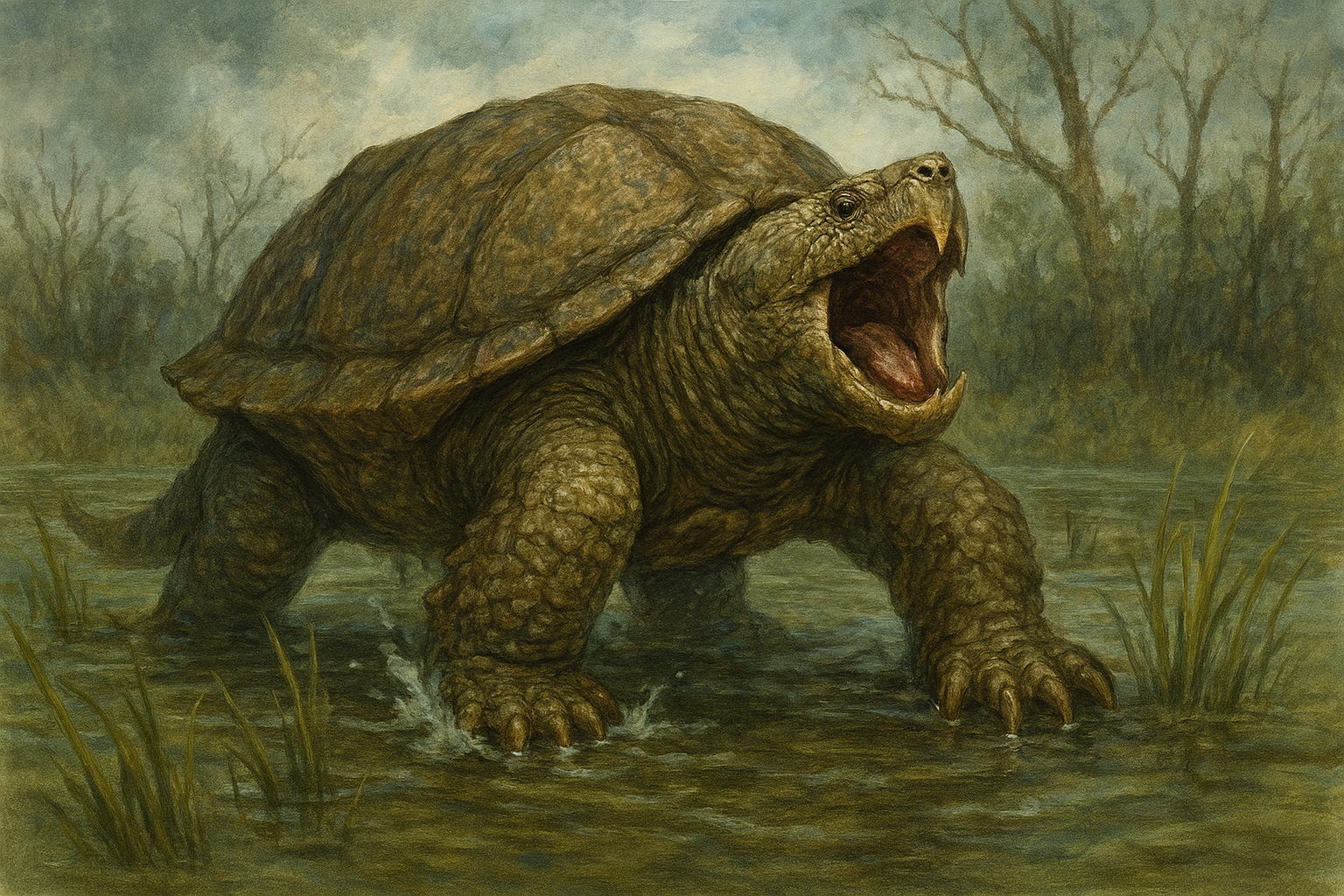
Description
The Legend of the Beast of Busco — Indiana’s Giant Turtle Mystery 🐢
Origins: how the tale began
The story of the Beast of Busco begins in 1898 when a farmer named Oscar Fulk claimed he saw an enormous turtle swimming in a small seven-acre lake on his farmland near Churubusco, Indiana. Fulk shared the story with others, but at the time it was largely dismissed and faded peacefully into local folklore — until about half a century later.
The 1948–1949 resurgence: “Oscar” resurfaces
In July 1948, two local men reportedly saw a massive turtle while fishing on the lake, estimating its weight at around 500 pounds. Soon, the landowner at the time claimed he saw the same beast, and more locals came forward with similar sightings. Word spread rapidly — the legend was revived. The enormous turtle acquired a nickname, “Oscar,” after the original farmer.
As the story gained traction, media picked it up, turning a sleepy rural area into a hotspot of curiosity. The evocative name "Beast of Busco" was coined, cementing the tale in popular imagination.
The Great Turtle Hunt of 1949
Belief in the beast led to organized efforts to capture it:
- Large portions of the lake were drained in hopes of exposing the turtle. At one point, the dam holding back the water collapsed — but the Beast was nowhere to be found.
- Divers were brought in to search the lakebed, but the effort failed due to poor equipment or difficult conditions.
- Baiting with smaller turtles also did not lure the creature.
At one dramatic moment, hundreds of people reportedly saw a dark, hulking shape with a massive shell and turtle-like head surface. Despite this spectacle, no physical evidence was ever produced. In the end, the hunt was abandoned — “Oscar” remained a legend.
What people said they saw — descriptions & skepticism
Eyewitnesses described the Beast as:
- An enormous snapping turtle with a shell as big as a dining table.
- Massively heavy — commonly estimated around 500 pounds.
- A head large enough to be roughly the size of a child’s.
Despite the excitement and stories, skeptics have raised doubts. The lack of physical remains, bones, or verifiable photos suggests misidentification or folklore amplified by media frenzy. Some believe it could have been a regular snapping turtle or even a floating log misperceived under poor visibility.
Legacy: From myth to festival
Though the Beast was never captured, the legend left a lasting mark on the town of Churubusco. Over time, the community embraced the story, turning it into a celebrated part of local identity:
- Each June, Churubusco hosts the Turtle Days Festival — with parades, games, and turtle races honoring the legendary Beast.
- Statues, murals, and other tributes to “Oscar the Turtle” dot the town.
- Fulk Lake and its surrounding acreage occasionally appear in real-estate listings, sometimes with a nod to the legend.
In short: whether real or mythical, the Beast helped shape a small community, turning a mysterious story into a cultural touchstone.
Interpretation: Myth, memory, or misidentification?
Why does the Beast of Busco endure? A few factors help explain it:
- Powerful imagery & storytelling — A giant turtle, lurking unseen beneath still waters, evokes primal fears and curiosity.
- Community identity — The legend became a unifying narrative, shifting from “monster hunt” to “festival celebration.”
- Skepticism & mystery — The lack of definitive evidence leaves room for wonder. Could a giant turtle have slipped away forever? Could it still be down there?
Some analysts even view the Beast as an example of folklore evolving into local tradition: the monster chase becomes a community ritual — not about fear anymore, but about identity, memory, and shared storytelling.
Why it still matters
Decades after the last “sighting,” the Beast of Busco remains widely discussed — among locals, cryptid enthusiasts, folklore scholars, and curious readers alike. The legend resonates because:
- It illustrates how folklore can emerge from ordinary events and grow into something larger than itself.
- It shows how community memory and media attention can transform a one-time claim into multi-generational myth.
- It serves as a reminder that sometimes the mystery — not the proof — is what endures.
For many, the true value of the Beast isn’t in proving whether the turtle existed — but in what the legend says about human belief, fear, hope, and our need for stories.
Behavior
Aquatic turtle, rarely seen, avoided capture
Reported Sightings (0)
No reported sightings yet.
Geographic Distribution
Indiana, USA
Fulk Lake (now dried up)
Characteristics
500+ pounds, 4-6 foot shell
Historical Context
1949
1949 Churubusco incident, celebrated locally