Honey Island Swamp Monster
Overview
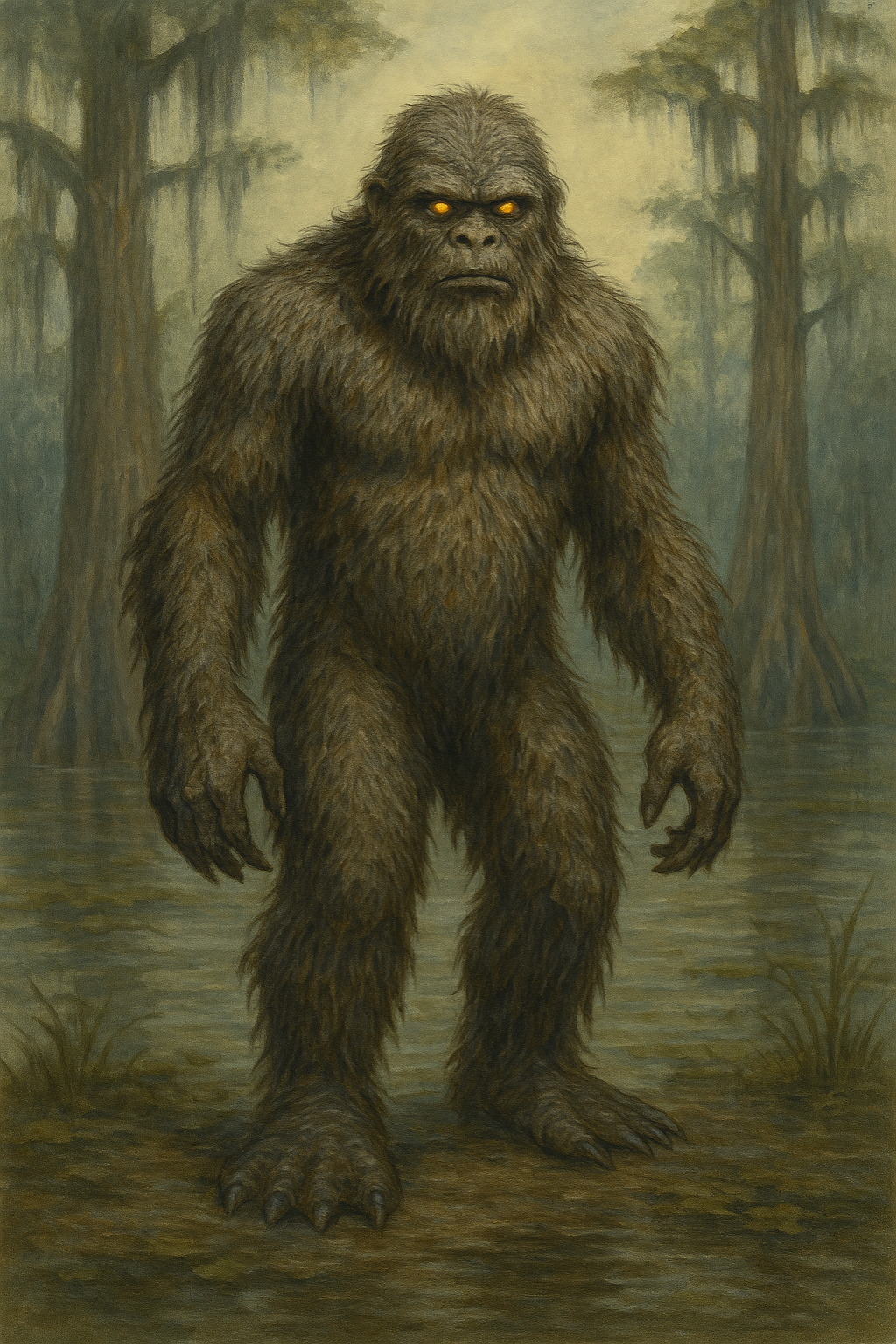
Description
The Legend of the Honey Island Swamp Monster
Introduction: A Creature Born of Mystery
Deep in the misty wetlands of St. Tammany Parish, Louisiana, lies the Honey Island Swamp—a sprawling 70,000-acre wilderness teeming with wildlife and whispered secrets. Among its cypress trees and murky waters lurks a legend that has captivated locals and cryptid enthusiasts for decades: the Honey Island Swamp Monster, also called the Cajun Sasquatch or La Bête Noire.
Physical Description: What Does It Look Like?
Eyewitness accounts paint a chilling picture:
- Height: 7–8 feet tall
- Weight: Around 500 pounds
- Appearance: Ape-like, covered in gray hair
- Distinctive Features: Yellow or red glowing eyes, webbed feet with four toes, and a putrid odor often compared to rotten eggs or swamp gas.
Some reports even describe a creature with a long snout and sharp teeth, suggesting a hybrid between a gorilla and a crocodile.
Origins of the Legend
The Honey Island Swamp Monster is not just a modern myth—it has roots in Native American folklore, where tribes like the Choctaw and Houma spoke of beings called Letiche, swamp guardians born from abandoned children raised by alligators. These stories served as cautionary tales about respecting nature and the consequences of neglect.
Later, Cajun settlers adapted these legends, blending them with their own traditions. Over time, the creature became known by names like Louisiana Wookiee and Tainted Keitre, evolving into the cryptid we know today.
First Documented Sightings
The modern era of the Honey Island Swamp Monster began in 1963, when Harlan Ford, a retired air traffic controller turned wildlife photographer, claimed to have seen the creature. Ford later discovered unusual four-toed footprints and even filmed the monster on Super 8 film, footage that surfaced after his death in 1980.
In 1974, Ford and his friend Billy Mills found a mutilated wild boar with its throat gashed and spine broken—evidence they believed pointed to the monster’s existence.
Other Reported Encounters
- 1975: Local fisherman Ted Williams saw the creature swimming across the Pearl River.
- 1981: A hunter claimed to have seen it walking beneath his tree stand.
- 1999: Dana Holyfield, Ford’s granddaughter, filmed a documentary featuring eyewitness accounts and claimed her own sighting.
Possible Explanations
Skeptics suggest alternative theories:
- Escaped circus animals: Local lore mentions a train crash in the early 20th century that released chimpanzees into the swamp, possibly giving rise to the legend.
- Misidentified wildlife: Alligators, bears, and other swamp creatures could account for sightings.
- Hoaxes: Some footprint casts and photos have been dismissed as forgeries.
Cultural Impact
The Honey Island Swamp Monster has become a tourism magnet, inspiring swamp tours, documentaries, and appearances in pop culture—from TV shows like Lost Tapes and In Search Of… to local festivals celebrating Louisiana’s cryptid lore.
Why Does This Legend Endure?
The swamp’s eerie beauty, combined with its isolation and rich folklore, makes it the perfect breeding ground for mystery. Whether real or imagined, the Honey Island Swamp Monster symbolizes the untamed spirit of Louisiana’s wetlands—a reminder that some secrets may never be fully uncovered.
Behavior
Shy, leaves four-toed webbed tracks, strong odor, nocturnal
Reported Sightings (0)
No reported sightings yet.
Geographic Distribution
Louisiana, USA
Honey Island Swamp
Characteristics
7 feet tall, 400-500 lbs
Historical Context
1963
1963 Harlan Ford sightings, ongoing reports