Grassman
Overview
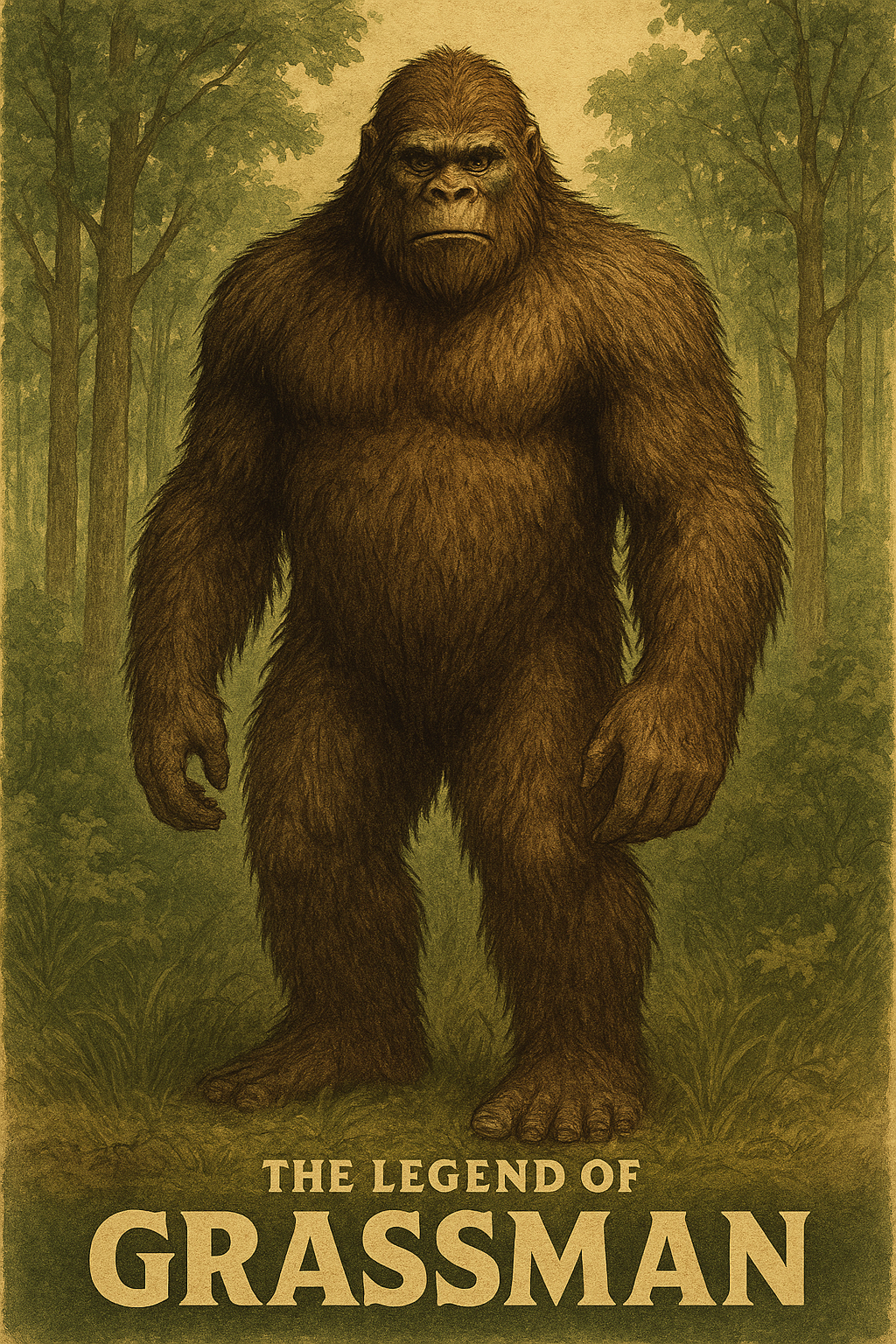
Description
The Legend of Grassman: Ohio’s Bigfoot Mystery in Cuyahoga Valley and Salt Fork State Park
When you think of American cryptids, Bigfoot tends to steal the spotlight. But in Ohio, a distinctive—and often more aggressive—variant has captured imaginations for generations: the Grassman. Described as a 7–9-foot-tall, bipedal, ape-like creature covered in shaggy hair, Grassman has been reported across the Buckeye State, with a special concentration in Cuyahoga Valley National Park and Salt Fork State Park. From eerie wood knocks to near-home encounters, and from alleged grass “nests” to the famous Minerva Monster case of 1978, Grassman blends folklore, eyewitness testimony, and regional identity into one of the Midwest’s most enduring mysteries.
Whether you’re a skeptic, a believer, or simply curious about local lore, this deep dive into Grassman’s history, behavior, and cultural footprint will equip you with context, caution, and a sense of wonder about what might be moving in Ohio’s forests after dark.
What Is Grassman? A Quick Profile
Grassman is Ohio’s name for a creature akin to Bigfoot—a towering, humanoid figure reported as:
- Height: Approximately 7–9 feet
- Appearance: Broad-shouldered, heavily muscled, and covered head-to-toe in dark hair
- Locomotion: Bipedal, with powerful strides and a gait often described as smooth but heavy
- Sounds: Deep vocalizations, howls, growls, and wood knocks
- Signs: Large footprints (often claimed to be 15–20 inches long), broken branches, and alleged grass nests or bedding areas
The name “Grassman” is thought to come from reports of rudimentary shelter-like structures woven from tall grasses and reeds found near fields and marshy woodlands. While skeptics suggest these could be wind-fallen clusters or human-made prank constructions, believers consider them a hallmark of Ohio’s Bigfoot variant—hinting at possible nesting or territorial behavior unique to the region.
The Minerva Monster (1978): Ohio’s Most Famous Grassman Case
No discussion of Grassman is complete without revisiting the Minerva Monster case—an August 1978 series of encounters near Minerva, Ohio. The story centers on the Caton family and neighbors who claimed to witness a massive, hairy creature lingering near the home, drawn to food scraps and seemingly unbothered by human presence. Reports included:
- Multiple Witnesses: Family members and locals claimed repeat sightings over several nights.
- Odor & Sounds: A pungent, foul smell and unsettling vocalizations were reported.
- Proximity: The creature allegedly approached structures, lingering near windows and outbuildings—behavior that aligns with Grassman’s reputation for boldness.
Local law enforcement did investigate, though—like many cryptid cases—no conclusive evidence emerged. Still, Minerva remains a touchstone in Ohio cryptid lore, widely cited in documentaries, books, and podcasts as a high-profile, multi-witness encounter that helped cement Ohio’s status in Bigfoot culture.
Ohio Hotspots: Where Grassman Is Most Often Reported
Salt Fork State Park (Guernsey County)
Often called Ohio’s Bigfoot capital, Salt Fork State Park has become synonymous with sightings, stories, and community events. The park’s expansive terrain—forests, ridges, and winding waterways—provides ideal cover for wildlife and, some say, for Grassman. Common reports include:
- Wood knocks and strange howls in the late evening
- Footprint discoveries near off-trail areas
- Sudden silence in the woods—anecdotally described by hikers as a “blanket of quiet”
- Movement in tree lines—large shadowy figures at dawn or dusk
Salt Fork also hosts Bigfoot-themed events, from guided hikes to annual conferences, lending the area both a cultural identity and a lively tourism draw.
Cuyahoga Valley National Park (Summit/Cuyahoga Counties)
Situated between Cleveland and Akron, Cuyahoga Valley surprises many visitors with how quickly suburban scenery gives way to dense forest, ravines, and secluded trails. Reported phenomena here often include:
- Feeling “watched” on long, quiet stretches of trail
- Distant, resonant vocalizations at night
- Large, humanoid shapes glimpsed moving uphill or across ridgelines
- Occasional mentions of disturbed ground cover or woven grass-like formations near low-lying marsh areas
While wildlife (deer, coyotes, black bears) can account for many sounds and movements, the consistency of witness descriptions keeps Grassman linked to this park in local lore.
Aggression vs. Elusiveness: Why Grassman Seems Different
Many Bigfoot stories emphasize avoidance—fleeting shadows, distant knocks, and a tendency to melt into the trees. Grassman lore adds a more unsettling twist: reports of approaching homes, barns, and vehicles. Why might Ohio’s version be more confrontational?
- Edge Habitats & Human Encroachment: Ohio’s fragmented woodlands create more boundary zones where wildlife (and would-be cryptids) and humans overlap. A creature protecting scarce resources may act defensivelywhen humans draw near.
- Food Access & Opportunism: Stories of garbage-raiding or livestock feed theft suggest food motivation. Animals pushed by scarcity sometimes risk closer contact, especially at night.
- Territorial Signals: Rock throws, branch breaks, and knocks could be warning behaviors. Whether it’s a large primate or misidentified bear, boundary displays aren’t unusual in nature.
- Interpretation Bias: Knowing Grassman’s reputation may color perception, making any bold wildlife behavior seem more menacing and cryptid-like.
Regardless of cause, caution is warranted in backcountry areas—both for real animals and for the possibility of human misinterpretation.
The “Evidence” Landscape: Footprints, Nests, and Sounds
Believers and researchers point to several types of physical or auditory phenomena often cited in Grassman cases:
- Footprints: Oversized prints with clear toe impressions are a common claim. Critics note the prevalence of hoaxesand misidentified bear tracks (bears can splay toes, and substrate can distort outlines).
- Grass Nests: Reports of woven or matted grass beds—sometimes circular, sometimes elongated—are used to argue for a nest-building creature. Skeptics counter with natural processes (wind, water, animal bedding from deer) or human fabrication.
- Wood Knocks: Sharp, resonant knocks are tied to alleged primate communication. Yet human campers or woodpeckers can produce similar sounds.
- Howls/Growls: Vague audio evidence abounds in cryptid lore. Proper analysis requires long recordings, known-bird/mammal comparisons, and careful field notes.
In short, the evidence remains ambiguous. For some, that ambiguity sustains intrigue; for others, it underscores the need for rigorous documentation, chain-of-custody protocols for casts or samples, and skepticism in the face of pareidolia (seeing patterns where none exist).
Folklore, Culture, and Community: Grassman’s Impact on Ohio
Grassman isn’t just an isolated creature; it’s a cultural ecosystem. Across Ohio, enthusiasts, park visitors, podcasters, YouTubers, and local businesses contribute to a living tradition that blends storytelling, outdoor recreation, and regional pride. Key elements of Grassman’s cultural footprint include:
- Events & Conferences: Bigfoot-focused gatherings bring cryptid enthusiasts, naturalists, and families together. Whether you’re there for field techniques or campfire tales, these events foster community.
- Documentaries & Media: Grassman appears in regional TV specials, online series, and podcasts that explore cryptid logic, witness interviews, and folklore studies.
- Tourism & Merch: From t-shirts to trail maps, the legend fuels micro-economies around parks and small towns.
Even skeptics often appreciate the sense of adventure this lore inspires—nudging visitors to get outside, learn about local ecology, and treat wild spaces with respect.
Natural Explanations: What Grassman Might Really Be
For many readers, the most compelling question isn’t whether Grassman is real, but what else could explain the reports. Several possibilities deserve consideration:
- Black Bears (and Bear Behavior): Ohio has a small but growing black bear population, particularly in eastern and southeastern regions. Bears can briefly move bipedally, producing startling silhouettes. Food-driven behavior may bring them near structures.
- Humans in Ghillie Suits or Heavy Gear: Hunters, researchers, or pranksters can produce cryptid-like outlines—especially at dusk. In some cases, deliberate hoaxing is a factor.
- Shadow & Light Effects: Low light conditions (dusk/dawn), fog, and tree canopy can easily create misperceptions of height and bulk.
- Pareidolia & Suggestion: Once a region has a strong cryptid identity, expectation shapes interpretation. Ordinary sounds and shapes become extraordinary under the spell of legend.
- Known Wildlife Misreads: Elk-like silhouettes (in states where they occur), large deer, or unusual coyote vocalizations often shock unprepared hikers. Coupled with distance and fear, the mind has a way of turning mysterious into monstrous.
These explanations don’t disprove Grassman, but they underscore how environment, psychology, and culture intertwine in wilderness encounters.
Fieldcraft for the Curious: How to Explore Responsibly
If you’re drawn to the mystery and want to visit Salt Fork State Park or Cuyahoga Valley National Park to explore, consider this responsible fieldcraft checklist:
- Plan Your Route: Use official park maps. Mark trailheads, loops, and estimated times.
- Go with a Group: Solo night hikes increase risk. Bring at least one companion.
- Record Smart: If you hope to capture audio or video, carry a tripod, extra batteries, and time-stamped notes(who, where, when, weather conditions).
- Respect Wildlife: Keep distance. Never bait animals or disturb habitats. Do not construct imitation “nests.”
- Stay Legal & Ethical: Avoid off-limits areas; follow park rules. Don’t trespass on private land.
- Safety Basics: Headlamp, first aid kit, whistle, layers, water, and a fully charged phone. Share your plan with someone not in your party.
- Leave No Trace: Pack out all trash and minimize impact.
- Report Responsibly: If you have a sighting, document specifics: location coordinates, time, sounds, smells, size estimates, terrain. Separate observations from interpretations in your notes.
Even if you never meet Grassman, you’ll deepen your appreciation for Ohio’s wild spaces and for the craft of careful observation.
A Timeline of Key Moments in Ohio Grassman Lore
- Pre-20th Century: Indigenous and settler traditions carry tales of wild men or forest giants, variations of which echo across North America.
- Mid-20th Century: Regional Bigfoot stories gain traction nationwide, setting the stage for local variants like Grassman.
- 1978: Minerva Monster case becomes Ohio’s most famous multi-witness Grassman-related story, embedding the legend in statewide folklore.
- 1990s–2000s: Growth in amateur research groups, documentary features, and online forums brings more attention to Salt Fork and Cuyahoga Valley.
- 2010s–Present: Bigfoot conferences, social media, and podcasting expand the community and tourism, making Grassman an enduring symbol of Ohio’s cryptid culture.
Why Grassman Endures: The Psychology of Mystery
Grassman thrives at the intersection of uncertainty and fascination. A few reasons this legend endures:
- Narrative Power: Humans are storytelling creatures. A colossal, hair-covered figure lurking in familiar woodlands is mythically irresistible.
- The “Almost Evidence” Phenomenon: Repeated “near misses” (sounds, silhouettes, prints) keep curiosity alive without resolving the mystery.
- Community & Identity: Grassman offers Ohioans a localized myth distinct from Northwest Sasquatch lore—a cryptid that feels native to their terrain.
- The Call of the Wild: Many modern visitors crave a brush with untamed nature. Grassman is the embodiment of what lies just beyond the trail’s edge.
Mysteries aren’t merely holes waiting for facts; they are engines of engagement—driving people outdoors, into parks, and into conversations that span generations.
FAQs: Grassman, Minerva Monster, and Ohio’s Bigfoot
Q: Is Grassman the same as Bigfoot?
A: In broad strokes, yes—Grassman is considered Ohio’s Bigfoot variant, but lore emphasizes aggressive or bold behaviors, including near-home encounters and potential grass nest building that some narrators describe as distinctive.
Q: Where should I go if I want to learn more or visit?
A: Salt Fork State Park is often cited as Ohio’s most active Bigfoot area, with events and guided hikes. Cuyahoga Valley National Park is another hotspot—just make sure to follow park rules and focus on safe, ethical exploration.
Q: What happened in the Minerva Monster case?
A: In August 1978, multiple witnesses near Minerva reported a large, foul-smelling, hairy creature frequenting their property at night, allegedly approaching buildings and scavenging food. Police investigated but found no definitive proof. The story remains a cornerstone of Ohio cryptid lore.
Q: Are there grass nests?
A: Reports vary. Some claim woven or matted nests, especially near marshy areas. Skeptics suggest natural bedding by deer, wind patterns, or human-made hoaxes. Nests remain unverified evidence.
Q: Could it be a bear?
A: Absolutely possible. Black bears can stand, move briefly on two legs, and raid human food sources. Misidentification increases at dusk and in dense forest.
Q: Is it safe to search for Grassman?
A: Searching in parks is safe when done responsibly: hike with others, stay on legal trails, bring gear, and respect wildlife. Never bait or provoke animals. If you encounter something unusual, keep your distance, observe, and record details calmly.
Behavior
More aggressive than typical Bigfoot, approaches structures
Reported Sightings (0)
No reported sightings yet.
Geographic Distribution
Ohio, USA
Ohio forests, particularly eastern Ohio
Characteristics
7-9 feet tall
Historical Context
1960s-present, famous 1978 Minerva case
Modern Ohio cryptozoology, 1978 Minerva incident