Colossal Claude
Overview
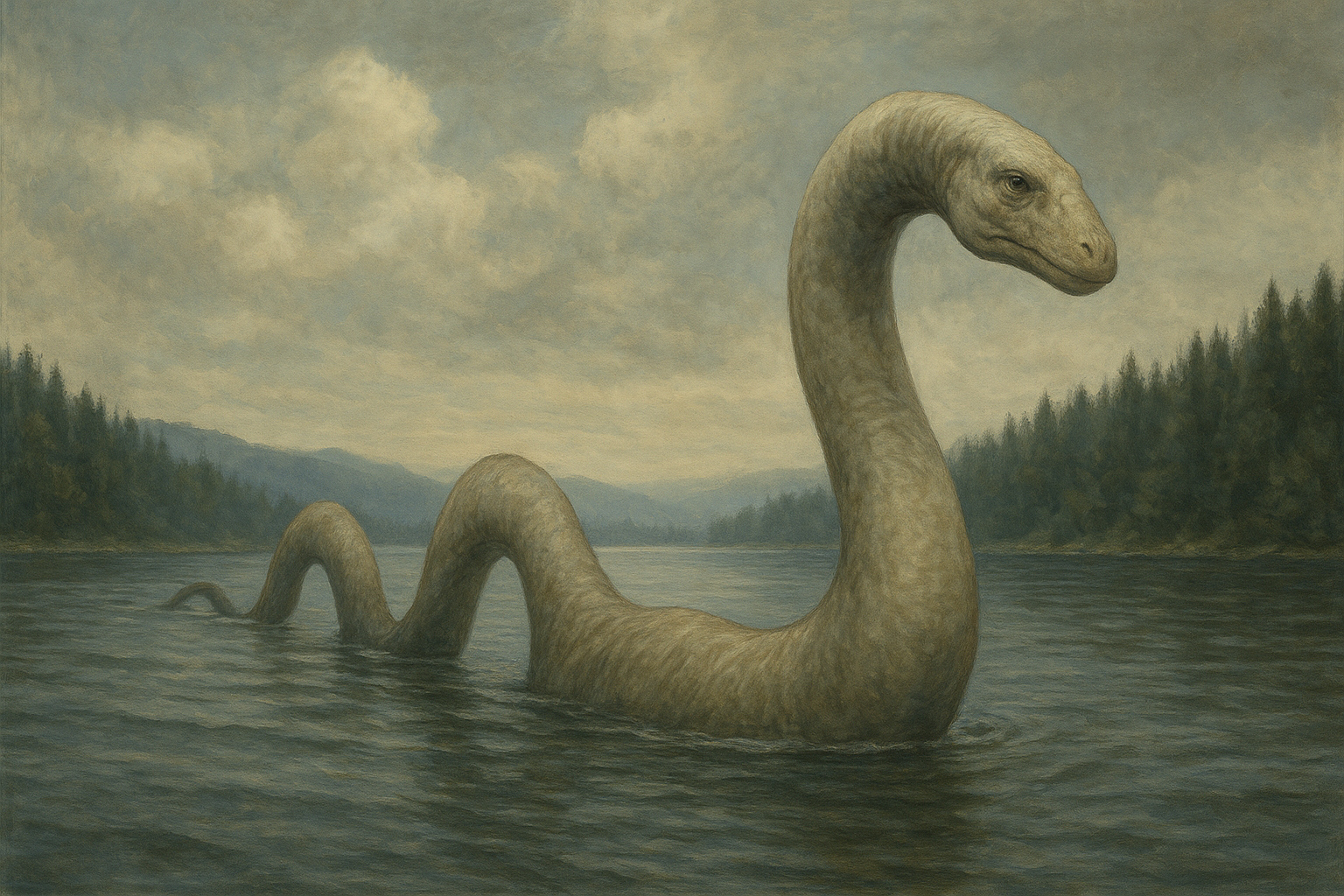
Description
Colossal Claude: Oregon’s Most Enigmatic River Monster
The Pacific Northwest has never been shy about its monsters. From Bigfoot wandering through conifer forests to ghost ships drifting along the fog-laden coast, the region practically breathes folklore. Yet among these legends, one creature swims in a quieter current—mysterious, slippery, and largely forgotten outside cryptid circles. Its name? Colossal Claude, the alleged leviathan lurking in the waters of the Columbia River.
A River with Stories Carved Into It
The Columbia River is massive—a twisting artery that carries snowmelt from the Rockies out to the Pacific. It’s a river of salmon runs, trade routes, and cultural heritage stretching back thousands of years. With its size and depth, it’s no surprise people have long whispered about the things that may—or may not—move beneath its surface.
Colossal Claude entered modern lore in the 1930s, at a time when America was in love with the idea of strange beasts surfacing just beyond civilization. Fishing trawlers, maritime workers, and river travelers occasionally reported seeing something in the water: a creature too large to be a sea lion, too serpentine to be a whale, and too persistent to be a drifting log.
But what truly cemented Claude in Pacific Northwest folklore wasn’t just a single account—it was the pattern of sightings.
What People Say Claude Looks Like
Descriptions vary, but a few traits recur often enough to sketch a picture:
- 40+ feet long, sometimes longer
- Serpentine, eel-like movement
- Pale or light-colored skin, leading some to compare it to oversized stenopterygians or eels
- A long neck in a few reports, though this may simply be the curve of its body
- A face described as “humanoid” or “camel-like” by some observers
- Large, rolling humps rising above the water’s surface
If this sounds like the Columbia River’s version of the Loch Ness Monster, you’re not alone. Regional newspapers at the time leaned heavily into that comparison, tacking Claude onto the growing global fascination with lake and river monsters.
The Most Famous Sightings
The most widely discussed sightings came from fishermen and sailors in the mid-20th century. Some claimed to see the creature following boats; others said it surfaced, looked around, and slipped back into the cold river without a sound.
One of the more playful parts of the legend involves reports of a crew allegedly chasing the creature and filming it—although the footage has since vanished, lost to time or dismissed as misidentified wildlife. Claude’s story has a habit of doing that: flickering into public awareness and dissolving just as quickly.
By the 1960s, the Coast Guard itself supposedly had an encounter, reporting a large, unidentified creature swimming near the mouth of the river. Whether this was a misinterpretation or something extraordinary remains a matter of debate.
Explanations—Natural or Otherwise
No good cryptid tale is complete without competing theories. Colossal Claude inspires several:
1. Misidentified Sea Lions
Sea lions are common along the Columbia, and in groups or at odd angles, they can appear unnervingly serpentine. Add fog, distance, and imagination, and even experienced river workers might report something stranger than reality.
2. Giant Eels or Sturgeon
White sturgeon can grow enormous—upward of 20 feet in rare cases—and their long bodies and pale coloring could easily match parts of Claude’s description. Sturgeon also exhibit unusual surfacing behavior that can be startling if you don’t expect it.
3. A Surviving Prehistoric Creature
A favorite among cryptid enthusiasts. The idea that an ancient marine reptile or long-lost eel species could survive in the deep channels of the Columbia is undeniably exciting, even if scientifically unlikely.
4. Folklore Blending with Reality
The Columbia River has a deep cultural history, and indigenous stories include water beings, spirits, and creatures that guard or inhabit the river. While Claude as a name and concept is modern, it may be echoing much older traditions.
Why Claude’s Story Endures
Colossal Claude’s appeal lies partly in what it doesn’t do. Unlike Bigfoot, it doesn’t steal campers’ food. Unlike Nessie, it doesn’t run tourism campaigns. Claude simply swims, surfaces, vanishes, and refuses to explain itself.
In a world increasingly mapped, measured, and monitored, the idea that something enormous and undiscovered might still glide beneath a familiar river is delightful. Claude represents mystery—pure, unpolished, and undomesticated.
Claude in Modern Culture
While Colossal Claude doesn’t have the same global fame as Nessie or the same cultural staying power as Bigfoot, it still surfaces now and then—literally and figuratively. Oregon breweries have named beers after it. Local festivals sometimes reference it. And the cryptid fandom has embraced Claude as an underappreciated member of the monster pantheon.
Online communities affectionately refer to Claude as the “hipster cryptid”—too indie, too low-key, too river-chic to chase mainstream fame.
Could Claude Be Real?
That depends on what you mean by real.
Is there a 40-foot monster patrolling the Columbia? Probably not.
Is there something that sparked all those sightings? Very likely yes.
And does the legend itself have cultural importance? Absolutely.
Legends don’t need scales or bones to exist—they just need people, stories, and a river willing to hide its secrets.
Final Thoughts
Whether Colossal Claude is a giant sturgeon, a trick of the light, or something genuinely unknown, the creature holds a special place in Oregon’s folklore. It reminds us that mystery still exists in familiar places, that rivers hold secrets, and that stories have a life of their own.
If you ever find yourself along the Columbia at dawn, when fog drapes over the water like a silver blanket, keep an eye out. You might just spot a ripple—or a hump—that doesn’t belong to any creature we’ve officially cataloged.
Colossal Claude is out there.
Or maybe it isn’t.
But the legend swims on either way.
Behavior
Surfaces occasionally, horse-like head, undulating motion
Reported Sightings (0)
No reported sightings yet.
Geographic Distribution
Oregon, USA
Pacific Ocean off Oregon coast, Columbia River area
Characteristics
40 feet long
Historical Context
1930s, particularly 1934 lightship sighting
1930s Oregon coast sightings, lightship crew report