Bear Lake Monster
Overview
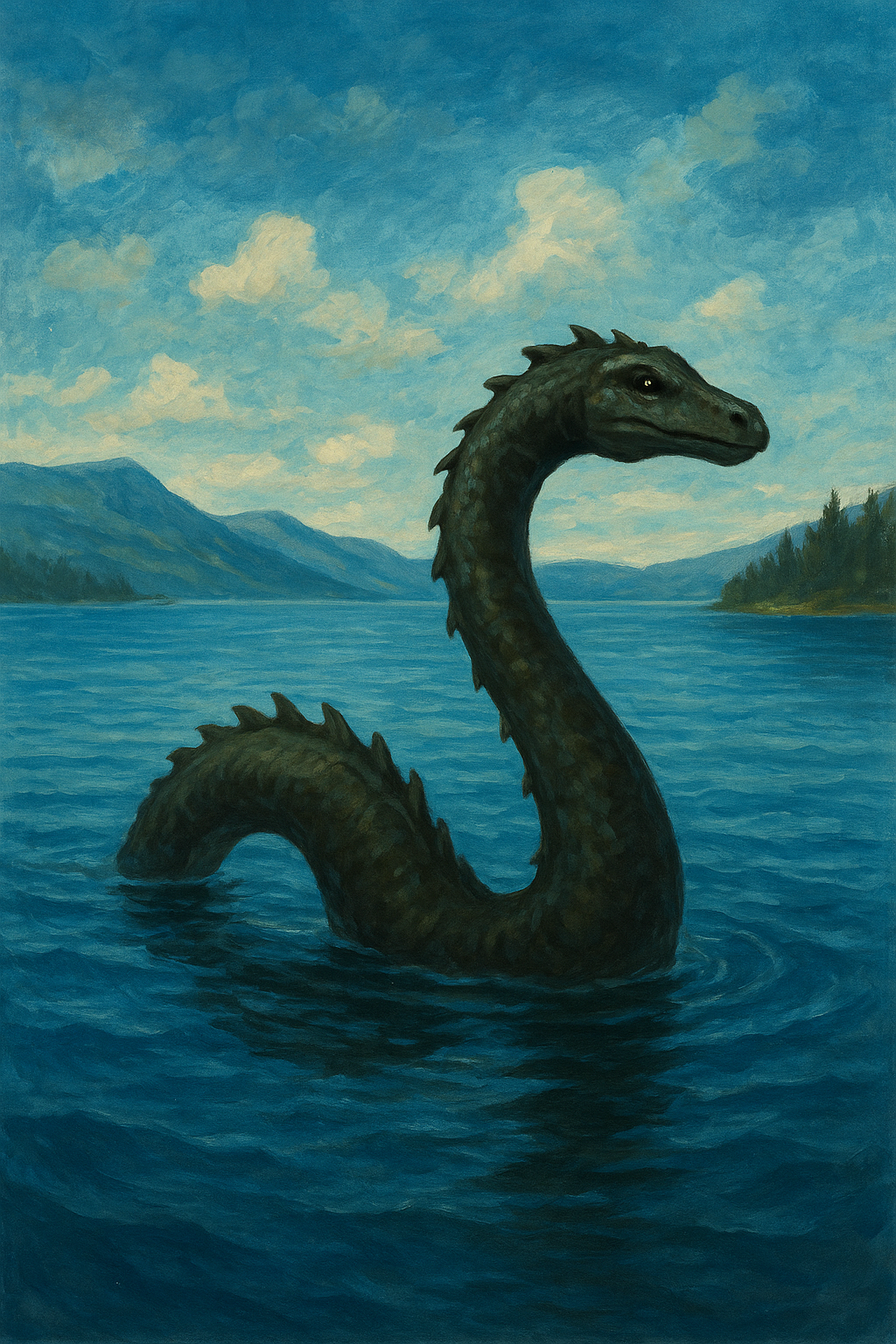
Description
The Bear Lake Monster: Utah’s Most Mysterious Lake Legend
Nestled high in the Rocky Mountains along the Utah–Idaho border, Bear Lake is often called the “Caribbean of the Rockies” for its turquoise water and striking alpine backdrop. Visitors come for boating, raspberry shakes, fishing, and scenic relaxation—but lurking beneath the surface is a legend far older and far stranger than the lake’s modern reputation. For more than 150 years, locals and travelers alike have whispered about a creature said to glide through the deep, blue water: the Bear Lake Monster.
Whether a product of folklore, misidentified wildlife, or something truly unexplained, the Bear Lake Monster has become one of the most enduring legends of the American West.
A Legend Born in Frontier Newspapers
The legend of the Bear Lake Monster first surged into public awareness in the 1860s, thanks to the frontier journalist Joseph C. Rich. Writing for the Deseret News, Rich published a series of reports describing a bizarre, serpent-like creature spotted by local settlers. The descriptions were dramatic: a long spiny body, a massive head, swift and powerful movements, and the ability to surge out of the water with surprising speed.
Even Brigham Young, leader of the early Latter-day Saint settlers in Utah, reportedly showed interest in the sightings and allegedly considered organizing a capture expedition. Whether he was serious or simply amused, the anecdote added official weight to the growing mythology.
Over time, Rich admitted he had embellished the tales—but by then, the legend had taken on a life of its own. Witnesses continued to report sightings long after the original stories, supplying new details and variations.
What Does the Monster Look Like?
Descriptions vary widely, but recurring themes have formed a rough profile of the creature:
- Length: 30–90 feet, depending on the story
- Color: Dark brown, black, or deep green
- Build: Long and serpentine, sometimes compared to a crocodile or giant sturgeon
- Head: Often described as cow-like, horse-like, or reptilian
- Movement: Smooth, powerful, fast—said to swim like a serpent or whip its body like an eel
- Surface Behavior: Sometimes rises partially out of the water, occasionally seen near shore
Some witnesses have claimed the creature can move between Bear Lake and Bear River, which feeds into the larger regional water system—a detail that adds both mystery and a hint of biological possibility.
Why Bear Lake Is the Perfect Stage for a Lake Monster
Bear Lake’s deep turquoise color comes from suspended calcium carbonate crystals that also obscure visibility under the surface. Even in the summer, the water is shockingly cold below a few feet. The lake plunges to depths of over 200 feet, creating an ideal environment for unknown shapes, shadows, and fast-moving fish to inspire wonder—or fear.
Add in the region’s frequent weather changes, choppy afternoon waves, and the way low light glints off the water, and it’s easy to see how the stage is set for sightings.
Modern Sightings: Hoaxes or Something More?
While the monster’s origins lie in 19th-century folklore, modern sightings still pop up from time to time. Boaters report unexplained wakes. Fishermen see disturbances in the water that don’t match typical fish behavior. Some locals claim to have witnessed humps or dark shapes rising and falling in the distance.
Skeptics dismiss these as:
- Misidentified logs
- Large trout or carp
- Optical illusions caused by the lake’s unusual clarity and color
- Waves interacting with boats or wind
But believers insist the sightings are too consistent over time to ignore. Even today, the monster appears in local festivals, tourist shops, and regional storytelling traditions.
Scientific Possibilities: Could Something Real Be Hiding?
While there’s no physical evidence of a prehistoric-sized creature in Bear Lake, there are a few plausible explanations that blend biology with folklore:
1. Giant Sturgeon
Lake sturgeon can grow to massive lengths—up to 12 feet or more—and have an armored, spiny appearance that matches some monster descriptions. If an unusually large one had once lived in Bear Lake, it could explain early sightings.
2. Ancient Relict Species
Some romantics like to imagine a surviving Plesiosaur or Mosasaur trapped in the lake since prehistoric times. SCIENCE says this is extremely unlikely, but legends love the idea.
3. Optical Distortions
Bear Lake’s unusually clear but color-distorted water can bend light in ways that make shapes appear larger, darker, or closer than they really are.
4. Migrating Wildlife
Large mammals such as moose or elk have been known to swim across lakes, and from a distance, their heads and backs can look surprisingly serpentine.
The Monster in Local Culture
Today, the Bear Lake Monster is more beloved than feared. The region celebrates its folklore with playful nods:
- Bear Lake Monster Boat Tours occasionally appear on local event calendars
- Cartoon monsters decorate signs and gift shops
- The “Bear Lake Monster Run” is a local racing event
- Kids’ books and local storytellers keep the myth alive
The creature has become a symbol of regional identity—a reminder that even in a world of GPS and smartphones, mystery still has a place.
Why We Love Lake Monsters
Legends like the Bear Lake Monster endure because they offer something we crave: the possibility that the world is bigger, stranger, and more magical than our daily routines suggest. Lake monsters hint that just beyond the edge of what we can see lies something unknown.
Whether you’re a skeptic, a believer, or someone who just loves a good campfire tale, the Bear Lake Monster invites you to imagine what might lurk beneath the surface of a beautiful, ancient lake.
Final Splash
If you ever visit Bear Lake, take a moment to look across the shimmering blue water. Watch the ripples. Study the distant waves. Listen to the wind. Let yourself wonder.
And if you see something move out there—something long, dark, and gliding silently beneath the surface—don’t forget to tell the story.
Legends survive because people keep telling them.
Behavior
Surfaces occasionally, serpentine swimming, creates wakes
Reported Sightings (0)
No reported sightings yet.
Geographic Distribution
Utah, USA
Bear Lake (Utah/Idaho border)
Characteristics
20-40 feet long
Historical Context
Shoshone tradition, 1868 modern reports
Shoshone indigenous tradition, 1868+ sightings