The Haunting Legend of the Not-Deer
Overview
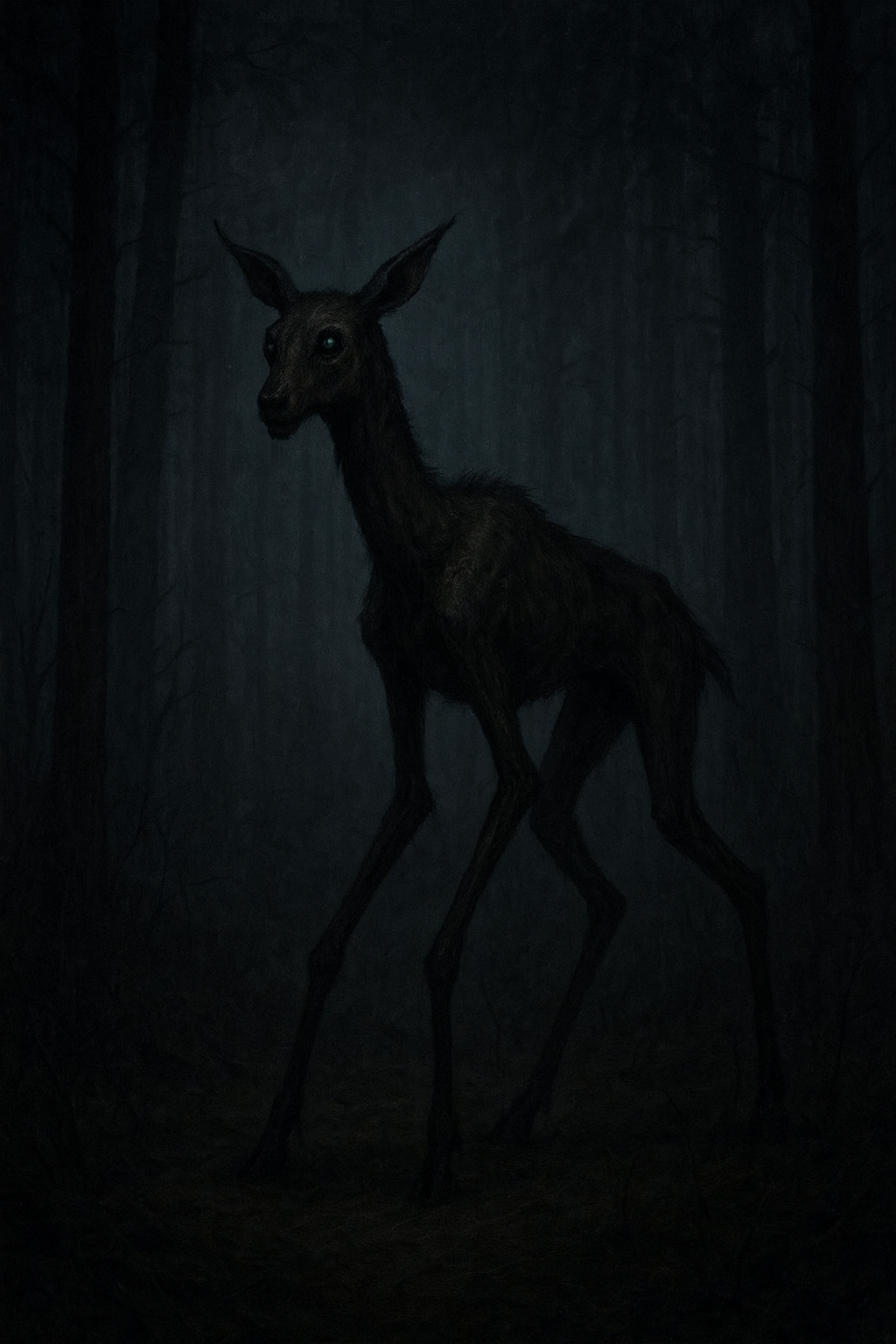
Description
Appalachia’s Most Unsettling Creature
If you spend enough nights driving the winding roads of Appalachia, you’ll hear whispers about a creature that looks like a deer—but isn’t. Locals call it the Not-Deer, and though the name sounds almost playful, the encounters are anything but. The Not-Deer has become one of the most chilling pieces of modern American folklore, a creature that blurs the line between the natural and the uncanny.
Today, the legend circulates everywhere from campfires to Reddit threads, but its roots reach deep into the mountains, where stories of strange wildlife are as common as the fog that rolls through the hollers at dusk.
What Is the Not-Deer?
Imagine this: you’re driving at night. Your headlights sweep across the trees and something steps into the road. At first glance, it’s a deer—slender legs, familiar silhouette—until your brain catches up with what your eyes are telling you.
Maybe it has too many joints.
Maybe its limbs are bent the wrong way.
Maybe its eyes are forward-facing like a predator’s.
Maybe it stands on its hind legs a little too comfortably.
By the time you realize something is wrong, the animal is already staring at you with an intelligence that feels… intentional.
This is the essence of the Not-Deer legend: an animal close enough to familiar to lull you, but just wrong enough to terrify you.
Where the Legend Comes From
The Not-Deer isn't a traditional creature with centuries of recorded mythology. It’s a modern folk horror born from:
1. Appalachian storytelling culture
The mountains are full of stories about spirits, shapeshifters, and unexplainable wildlife. The Not-Deer slots into that ecosystem naturally—another thing that lives in the woods and watches you go by.
2. Nature’s uncanny moments
Deer often behave strangely—diseased, injured, or simply unpredictable. Combine that with nighttime, isolation, and a rural landscape, and the uncanny valley does the rest.
3. Online folklore
The legend took off through internet storytelling, especially first-person accounts. These stories aren’t elaborate myths; they’re short, unsettling snapshots told in the language of real experience. That makes them feel closer, more believable, like something that could happen tonight on a dark back road.
Common Traits Reported in Not-Deer Encounters
While the details differ, some themes show up again and again:
Humanlike intelligence
People describe the Not-Deer as watching them with eerie awareness. Deer normally flee. The Not-Deer doesn’t. It observes.
Wrong anatomy
Sometimes the neck bends too far.
Sometimes the legs are too long.
Sometimes the joints hinge the wrong direction.
It’s always subtle—just enough to trigger a primal alarm.
Predatory features
Forward-facing eyes.
Unusual gait.
Sudden, unnatural stillness.
A sense of dread
Nearly every account mentions an overwhelming feeling of “this is not supposed to exist.”
Why the Not-Deer Resonates Today
Folklore evolves with the times. The Not-Deer belongs to an era where people crave stories that feel personal, grounded, and almost plausible.
The Uncanny Valley of Nature
We’re used to folklore creatures that are overtly fantastical—dragons, werewolves, ghosts. The Not-Deer is the opposite. It’s terrifying because it’s almost normal.
A reflection of rural isolation
Appalachia is full of remote roads, where cellphone service cuts out and the woods crowd close. When something steps into your headlights out there, it’s just you and it.
Crowdsourced mythology
Online communities let people collectively build legends out of shared unease. The Not-Deer didn’t come from a book. It came from thousands of people saying, “Has anyone else seen something strange?”
Is the Not-Deer “Real”?
That depends on what kind of “real” you mean.
Biologically? Probably not. The behaviors often described could be explained by injury, disease (like chronic wasting disease), or misperception in low light.
Culturally? Absolutely.
The Not-Deer is real in the way urban legends are real: it’s a story carried by communities, shaped by fear and fascination, and shared because it taps into something universal—our instinct to look twice into the dark.
Psychologically? Even more so.
Humans are wired to detect when something is off, even if we can’t articulate why. The Not-Deer sits directly in that primal territory.
A Modern Monster for an Ancient Fear
What makes the Not-Deer special isn’t gore or overt monstrosity. It’s subtle. It’s quiet. It’s the moment your mind realizes you’ve miscategorized something in nature—something that looks like it belongs in the world you know, but doesn’t quite fit.
Folklore is born in those in-between moments.
The Not-Deer lives there.
Next time you’re driving a lonely road at midnight, keep your eyes on the treeline. And if a deer steps out in front of your car… look closely. Not everything in the mountains is what it seems.
Reported Sightings (0)
No reported sightings yet.
Geographic Distribution
Southeast