Gaither Plantation, Covington, Georgia
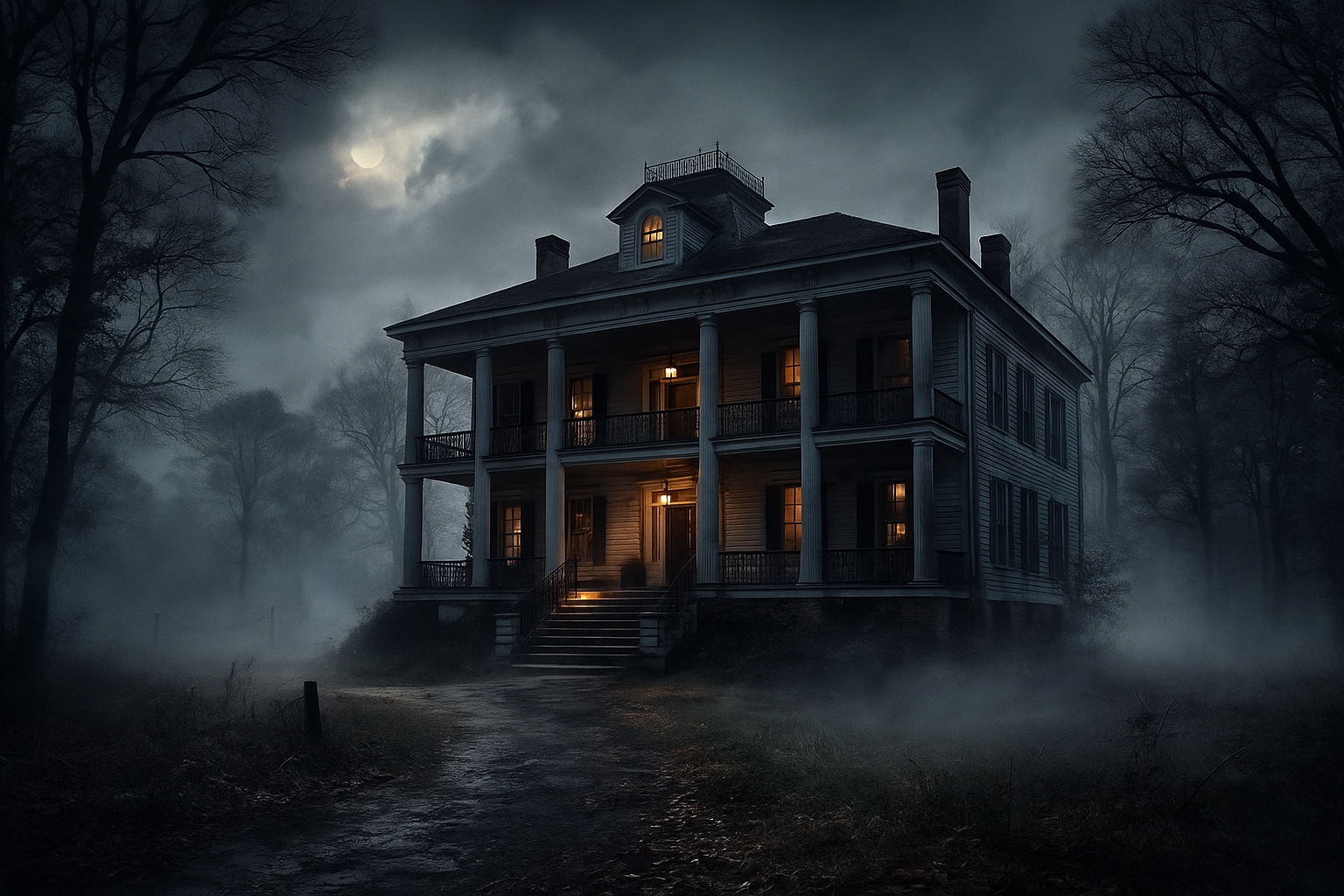
Haunted History of Gaither Plantation, Covington, Georgia
The Origins: Gaither Plantation — a Cotton Era Estate
The Gaither Plantation, located in Covington, Georgia, began as a substantial antebellum cotton plantation run by William Hulbert Gaither and his wife Cecilia. The estate covered hundreds of acres and was home to more than a hundred enslaved people. The main house was built around 1850.
During the Civil War, local lore claims that the plantation secretly hid fleeing Confederate soldiers, possibly in hidden rooms or attic spaces, in an effort to protect them from Union forces. Over time, the Gaither family’s fortunes declined dramatically. Their daughter Clara died young, W. H. Gaither passed away in 1890, and repeated misfortunes, including crop failures, eventually forced Cecilia to lose the property. At one point, she reportedly owed just a small sum in taxes but was unable to pay, leading to a forced sale.
The plantation’s dark history isn’t just about slavery and the Civil War — it’s also marked by personal tragedy, economic collapse, and lost legacy.
The Shift: From Plantation to Public Historic Estate
After changing hands over the decades, the property eventually came into local ownership. During the 20th century, many of the outbuildings were lost — barns burned, slave quarters fell apart. New structures were even added, including an old church that was relocated to the property.
Today, the plantation is managed by preservation efforts and used for public events, tours, weddings, and film productions. The plantation has gained renewed attention in pop culture: productions such as Madea’s Family Reunionand The Vampire Diaries have used the house and grounds for filming.
Haunted Tales & Paranormal Reports
Over the years, many visitors, investigators, and caretakers have reported persistent paranormal phenomena at Gaither Plantation. Among the most commonly cited experiences:
- People have reported seeing faces or figures in windows, even though no one is present in the house. Often described: a woman’s face in the attic window or a figure looking out a downstairs window.
- Inside the house, buffet doors in the dining room have been reported to open and close on their own; “shadow figures” or fleeting shapes — often interpreted as ghosts of Confederate soldiers — have been seen.
- In the attic, visitors and ghost-hunters have heard footsteps, music, and arguments of women, even when the area was empty. One paranormal group reportedly recorded a voice saying, “Don’t go up the stairs,” as they were heading up toward the attic.
- In what used to be Cecilia’s bedroom, people have reported the pages of her Bible turning by themselves, a heavy rocking chair moving unaided, and apparitions of a woman calming a baby.
- Other phenomena include the handle of an indoor well turning by itself, unexplained footsteps, disembodied voices, and the smell of pipe tobacco or old-fashioned perfume in upstairs rooms.
One notable anecdote: during filming of Madea’s Family Reunion, crew members said they heard footsteps on a widow’s walk. They paused filming — no person was found. They tried again, footsteps persisted. The director finally shouted, “Will the ghost of the house please cooperate.” Remarkably, the disturbance ceased and filming continued without further incident.
Why So Many Stories? Intersections of Trauma, History & Memory
What is it about Gaither Plantation that seems to attract so many ghost stories and paranormal claims? A few factors may contribute:
- Historical trauma: The plantation was once run on the labor of enslaved people, leaving a heavy cultural and emotional legacy.
- Civil War sheltering: If Confederate soldiers were hidden there during wartime, the fear, secrecy, and potential violence add to the emotional weight of the property.
- Family tragedies & decline: The Gaither family suffered heartbreaking loss, economic ruin, and loss of property. Such personal despair and decay can fuel ghost lore.
- Mixed-use through time: Over the decades, the property changed hands, buildings decayed, and new structures were added — each layer contributing its own ghost stories.
- Public exposure and storytelling: Now as a public site used for events, weddings, tours, and film shoots, the likelihood that someone experiences something “unexplained” goes up. Every visitor brings their own expectations, fears, and stories.
So ... Is It Haunted? What to Make of the Legend
In short: you decide.
There are many consistent reports — from guests, caretakers, investigators, and even crews filming major productions — that describe unexplained phenomena: apparitions, voices, moving objects, footsteps, orphaned smells, and atmospheric oddities.
On the other hand, historical trauma, decay, eerie architecture, and expectations (if you know a place is “haunted,” your mind may interpret ambiguous stimuli accordingly) may easily play roles in creating or amplifying ghost stories.
Gaither Plantation occupies a compelling intersection of history, memory, grief, and folklore — the kind of place where the past doesn’t easily stay buried, whether literally or metaphorically.
Location Photos (0)
No photos yet. Be the first to share a photo of this location!